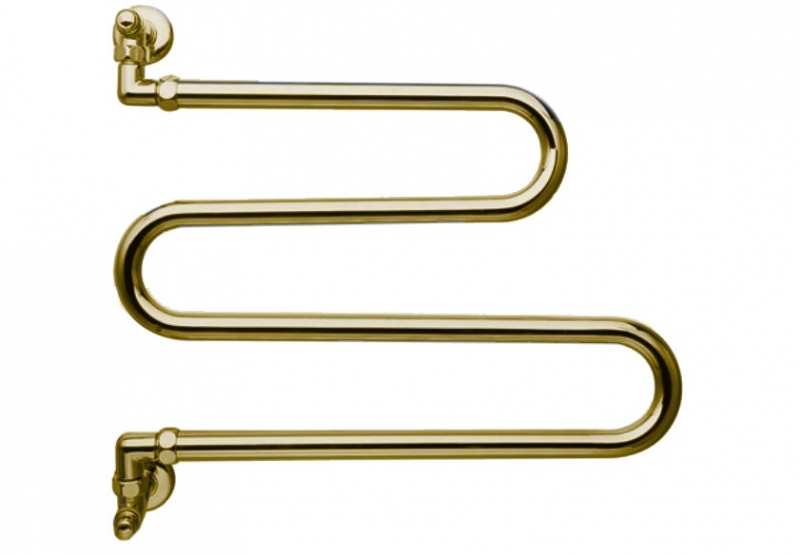
A heated towel rail is a modern type of tubular heating equipment., which is intended for drying hygiene products, towels and other small things. The modern design of these appliances allows them to even serve as a decoration for the bathroom., that's why they are called design radiators, which, according to the technological characteristics of materials, of which they are made can be divided into several types of heated towel rails:
- stainless steel;
- from non-ferrous metals (copper, brass, aluminum);
- made of dark steel with internal anti-corrosion protection;
- dark steel with heat exchanger.
1-This type of device can show the highest wear resistance under real operating conditions.. At the same time, the design and engineering solutions of Russian manufacturers are in no way inferior in quality to their foreign counterparts, and their prices are more affordable.
Models made of non-ferrous metals, like a foreigner, and domestic production are widely available on the shelves of specialized stores. But they have a short service life due to the influence of the brutal high-temperature environment in the hot water supply system, as well as the presence of antagonist metals in the water supply, which promote corrosion.
Models made of dark steel with internal anti-corrosion protection over the years of research work have not shown excellent results in real operating conditions in Russia, so they are not in great demand. Moreover, these three types of equipment differ in one drawback: the internal cross-section of the pipes of these devices gradually narrows, up to complete blocking of the lumens due to precipitation of various impurities, in the water.
4-second type of these devices (double-circuit) made of dark steel with a heat exchanger does not have the above disadvantage, since it is characterized by dilution through two independent coolant circuits. One circuit is formed by equipment tubes, and the 2nd one is connected to the DHW system. Heat from the second circuit is transferred through the heat exchanger to the first circuit, which is automatically protected from the harmful effects of the hot water system: highest temperature and pressure, and also from the brutal environment.
Most often, in double-circuit devices, the heat exchanger is built into the structure of the equipment itself, In this case, it is necessary to ensure a pressure drop, and this complicates its installation. The ideal option is to separate the heat exchanger from the heated towel rail and install it on the hot water riser, which promotes good heat transfer.