The division of ornamental plants in the garden room and very conditional. Some thermophilic flowers have long been grown on beds in summer, and winter stored in warm basements.
Yuri zhostera
/ From personal archive
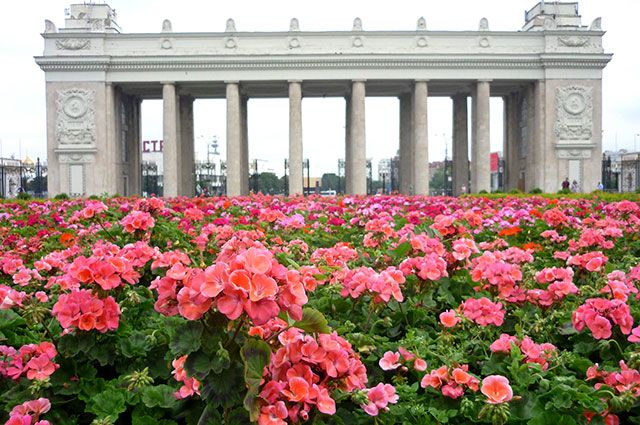
The most famous subtropical inhabitants of flower beds— this gladiolus, dahlias and canna. Now open ground flower beds all the more often you can see the ordinary household «heranky», rather— pelargonium zonal— or «colored nettles» — hybrid coleus.
Harmful, but beautiful. What weeds will decorate the garden
And now hippeastrum
I propose to consider another candidate for flowerbed feeding. This time— gippeastrum. From the outside it looks very similar to garden lilies, despite the fact that it belongs to the amaryllis family. In indoor culture, hippeastrum can be grown in two ways: Always keep in a pot or dig up for the winter and store until spring in the refrigerator at a low positive temperature. In the first case, the plant will bloom in March-April, in the second— in about 3–4 weeks after landing. But try planting the bulbs outside of pots after cool winter storage., and to the flower bed. There will be much more room for the roots there, as a result— the flowering will be magnificent, and by autumn the bulbs will form surprisingly large.
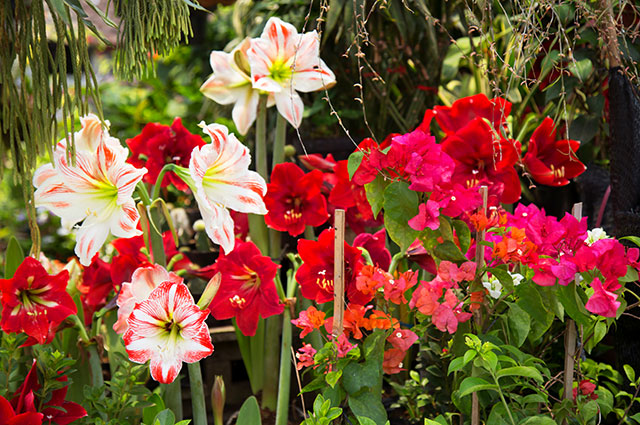
Photo: Shutterstock.com
How to survive the winter
The most important thing when growing hippeastrums in a flower bed— protect plants from spring and autumn frosts. Everything else is the same, as when cultivating gladioli. At the end of summer the bulbs are dug up, dry first in the sun, then under the canopy. Before storing in the refrigerator, trim off wilted leaves and roots., separate small daughter bulbs. Hippeastrum bulbs cannot be stored at room temperature., otherwise they will dry out.