Sad, when a fair share of the harvest is lost even before flowering begins. A prerequisite for this may be the activity of the apple blossom beetle., which, due to its corresponding long proboscis, is called the weevil or even the "elephant".
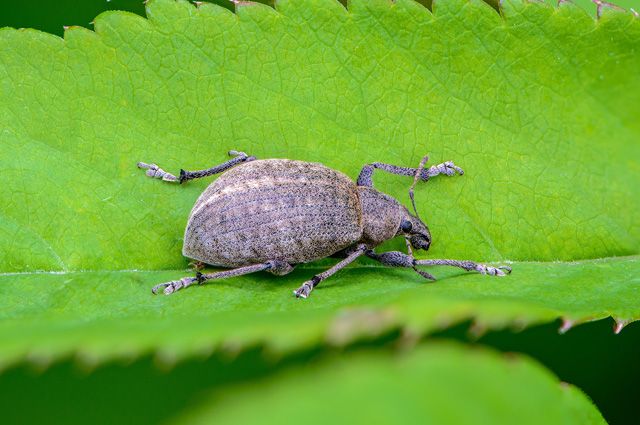
Shutterstock.com
1-The first sign of the presence of a weevil in the garden can be recorded during the swelling of the buds of apple trees – if yellowish drops of juice appear on them, so, вредитель пробудился и приступил к первой трапезе. Жук прокалывает своим хоботком кроющие чешуйки и пьёт сок. Пока это не приносит огромного вреда растениям. But the more such drops on the apple trees, the more individuals have settled in the garden and the more significant damage threatens your harvest.
A method of cunning traps. How they fought insect pests in the old days
Defense should be built in several echelons. 1-the blow may be mechanical. Weevil, like all insects, – cold-blooded creature, and its vital activity directly depends on the air temperature. If it's lower 5 – 7 degrees, then the pest becomes ossified, losing the ability to fly and crawl. This can be used immediately after the snow melts and before the buds begin to bloom. – morning temperatures hover around 0 degrees. During this period, just knock on wood. (for example, sledgehammer, carefully wrapped in thick cloth) – and the insects will simply fall off it. So that they do not get lost in the fallen leaves, under the crown you need to spread plastic film in advance. Замёрзших долгоносиков собирают и уничтожают.
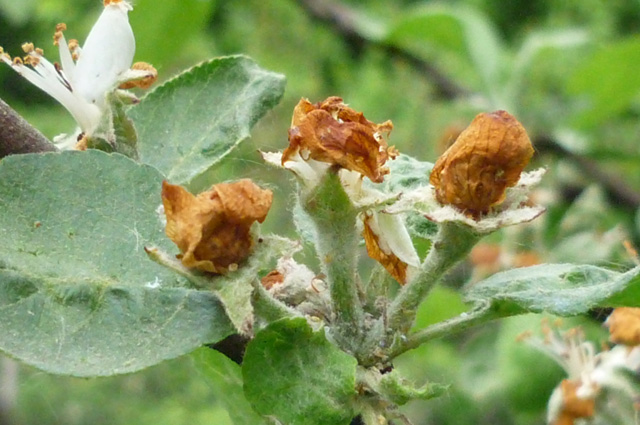
Личинки долгоносика повредили бутоны. Photo: From personal archive / Misha Pasternak
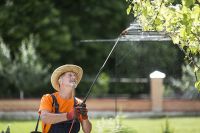
Однако, как только потеплеет, жуки расправляют крылья и просто перелетают из одного сада в другой – there are no borders or fences for hungry pests. Subsequent measures to combat weevils involve spraying with insecticides. Gentle option – bioinsecticides, произведённые на базе микроорганизмов, избирательно поражающих различные виды насекомых. Более известные: Битоксибациллин, Лепидоцид, Фитоверм. Однако их эффективность невысока, period of actions limited, and, the most important, microorganisms, which are the active principle in these products, inactive at temperatures below 15 degrees. Therefore, from the beginning of bud break to flowering, it is necessary to carry out 4–5 treatments.
"Rain" for pests. How to protect your garden in spring?
Chemical insecticides are more toxic, but also more effective. Their action does not depend on air temperature, and the duration of the protective effect is about 15 days. Therefore, you can limit yourself to two treatments – after buds break and during the stage of buds moving out of the buds. After flowering no chemicals, Neither biological products will help anymore.
If the female laid eggs in the buds, then in 4–5 within days, larvae will hatch from them and begin to eat away the contents of the ovary. Such flowers will never bloom and bear fruit.. Collect and destroy unopened buds with larvae inside.