Duvet Research, conducted by Roskachestvo, showed, that at a fairly high cost (on average from 5 to 33 thousand rubles) Compared to synthetic blankets, they can have many disadvantages. for example, manufacturers are replacing expensive goose down with duck down, there are dust mites in the blankets and there is a strong smell. The department reported this, based on the results of checking duvets 18 brands from Russia, Sweden and Austria.
«Among the duvets 18 There were no brands contending for the Russian Quality Mark. Little of, none of the blankets met the mandatory legal requirements. There are no products in the Roskachestvo rating with scores higher than three points. Experts took into account both legal requirements, and the challenges of the industry as a whole, therefore, we included characteristics familiar to the USA and Europe in the tests, which are not yet standardized in Russia», — Roskachestvo stated.
In which blankets was duck down found instead of goose down??
According to Roskachestvo experts, duvets are valued even more, than synthetic ones. It's not hot under such a blanket in the summer, in winter — not cold. The most common fillings for duvets — duck and goose fluff. At the same time, goose down is more durable and warmer. Its service life — 20 years, and duck — 5 years.
The results of the Roskachestvo study showed, that in the blankets of the following brands, instead of the promised goose down or feather, the filler was combined with cheap duck down:
- «Light dreams»;
- Belpol;
- Ecotex;
- Lucky Dreams;
- Medsleep;
- Natures;
- Gowns.
And the manufacturers Ascona and «RUNO factory» completely replaced the stated goose down with duck down.
Also, the vast majority of manufacturers, who announced 100% goose down on the label, We also used feathers in the filler. The label turned out to be true only for blankets of 3 brands:
- Dargez;
- IKEA;
- Primavelle.
What else Roskachestvo found in duvets?
Introduction of feathers instead of down — not the worst option yet, they say in Roskachestvo. Chopped feathers were also found in the filling of some of the blankets studied., broken and warped feathers (in excess of permitted 9%), as well as a huge amount of lint.

Is it possible to distinguish, what kind of fluff is in the blanket — duck or goose?
Only a specialist can distinguish goose down from duck down., they say in Roskachestvo. However, an indirect sign, talking about replacing down, the weight of the product can serve. A duck down duvet will be a little heavier, than from goose.
What are poison blankets and why are they dangerous??
Toxicity index value, determined in the aquatic environment. It must be within the boundaries of 70% to 120% inclusive, experts explained.
According to the test results, the toxicity indicator was higher than normal (and this is a violation of the requirements of technical regulations -TR CU 017/2011) in blankets of 3 brands:
- AlViTek — 166%;
- IKEA — 151%;
- Askona — 135%.
Have dust mites been found in blankets??
Yes, were. More than half of the brands contained dust mites in their products, fortunately, only in fragments. No living parasites detected.
«But mite fragments can also be dangerous for allergy sufferers», — experts noted.
Only in goods 5 trademarks, not even fragments of dust mites were detected:
- German Grass;
- IKEA;
- «Samson»;
- Lucky Dreams;
- Natures;
- Primavelle.
What are cloudy blankets and which blanket has the cleanest down??
Sometimes the smell is nasty, the presence of parasites in the blanket may be related to the fact, what before, how to put down and feathers in a case, the manufacturer didn't wash them properly. Therefore, there is a special test for turbidity, which defines, is there dirt or dust in the filler?.
The turbidity index is not standardized in Russia. Therefore, Roskachestvo introduced it into its own advanced standard at the request of the industry. According to European and US standards, the purest standards start from 550 • hypoallergenic (300 • hypoallergenic— low turbidity).
Blankets, which are carried out in Russia, still far from meeting European requirements, experts say. The turbidity index turned out to be below small 300 mm for products 12 marks. Hold «European standard» 5 manufacturers:
- Ascona;
- Charge;
- Lucky Dreams;
- Primavelle.
IKEA blankets have the cleanest filling. The turbidity index was more than 1000 • hypoallergenic. But this same blanket violates the requirements of Russian legislation on toxicity, noted in Roskachestvo.
How to properly care for a duvet?
Roskachestvo specialists shared useful tips on caring for duvets with consumers:
- The duvet needs to be shaken and fluffed daily, so that the fluff is in a straightened state during the day, and also ventilate frequently.
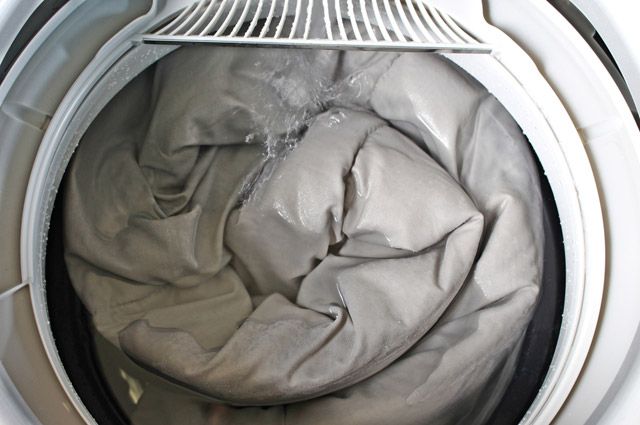
- The product must be washed at a temperature of 30–40 °C, using a mild detergent without bleach, and set the spin to low speed.
- Before long-term storage, it is necessary to ventilate and dry the duvet well.. You can't store it in cellophane — fluff needs air. A cotton cover is best.
- To get rid of dust mites, the blanket must be regularly ventilated and dried
- If you decide to dry clean your duvet, it's better to choose that one, where will the fluff be blown away?, and not ozonize.
Source of information:
rskrf.ru/ratings/tovary-dlya-doma/tekstil/odeyala-pukhovye/
A source: aif.ru