Trading networks begin to sell seedlings and planting material of ornamental crops in advance. There are several ways to save them until the planting season..
At the start of the season, impatient gardeners sometimes take risks.. Agree, it is difficult to resist buying a rare species of perennial or a unique variety of roses, wished for for several years. At the same time, garden online stores begin to deliver the ordered plants.. With all this wealthwom, which is about to come out of a state of rest, something needs to be done, to prevent growth and preserve planting material until a reasonable planting time.
Buy high quality
Never commit spontaneous, ill-considered acquisitions. Consider buying carefully, even if it entices you with a low price or rarity. Inspect the seedling, it should be in perfect condition, otherwise, the plant will be difficult to preserve before planting. If you notice mold stains, rot, wet or mucus-covered areas on the bark or roots, you will smell a suspicious unpleasant smell, if rhizomes, roots or bulbs will be sluggish, refuse to buy.
The best way – purchase high-quality seedlings of perennials or ornamental shrubs, resting. In this case, the kidneys must be dormant., but awake, ready to start growing. Roots or rhizomes (if they can be considered) – snow white or dark, brown, corresponding to the type, healthy, flaccid, without damage. For instance, a bush rose seedling with an open root system must have 2–3 stem length 20–25 cm, 2–3 main roots 10–20 cm depending on the commercial grade, as well as a stem at the site of inoculation with a diameter 0,5 cm.
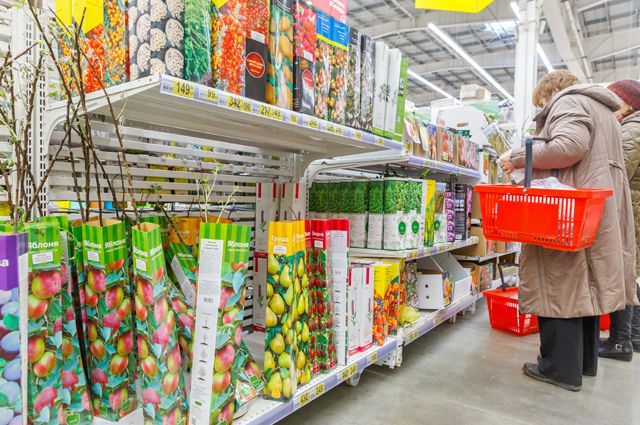
Roses are often sold in closed-root bags.. The shoots are covered with wax., protecting from overdrying. In this case, inspect the shoots – they should not be elongated and pale, and the grafting site of the grafted rose must be intact. Healthy seedlings will perfectly survive storage for 1.5–2 months and will quickly take root after planting.
4 storage options
Home refrigerator
Store seedlings of shrubs and perennials at temperatures from 1 to 5°C. For small landing units, package of onions or 1–2 bushes, you can find a corner in the refrigerator. Optimal location – container for vegetables, it is suitable for temperature conditions. Wrap seedlings without a container with a slightly damp cloth, sphagnum moss and place in a bag. Wrap seedlings with closed roots with foil – this will keep the moisture level constant. Inspect the seedlings regularly, look, so that mold does not appear.
Glazed balcony
If there are many seedlings, then you have to arrange a special storage, eg, on the glazed balcony. Use cardboard boxes or wooden crates. Cover the bottom of the box with a layer of lightweight substrate (sand, sawdust or peat), put the seedlings, slightly moisten with a sprayer, sprinkle with the same material. Watch the temperature on the balcony. If it is not insulated, but only protects from snow and wind, then in such criteria the seedlings will withstand fluctuations from +5 to –5°C. It's getting warmer? Leave the windows open. To equalize the temperature in severe frosts, use many layers of paper. (better than newspaper), foamlayer, additional cover with old blankets. It will be a good help «balcony cellar» for storing vegetables, which maintains a constant temperature.
Country cellar
Owners of country houses with a cellar, having access to them in winter, have the opportunity to save planting material there. In the cellar it is usuallythere is a measured temperature, vegetables are stored, which require temperature 2–5°C. Place the seedlings with roots vertically in a box or bucket, sprinkle with sawdust, sand or peat, moisten a little. It is best to place them away from vegetables or cover them additionally with a cardboard box or plastic bucket., this will help protect against possible infection, if vegetables suddenly start to spoil. Inspect ornamental plants from time to time, check their condition, moisten lightly if necessary.
Prikop in a snowdrift
If there is no cellar, but the summer cottage is in transportavailability, it makes sense to take the seedlings to the dacha and bury them in the snow or in a trench or hole prepared in the fall. Place the seedlings in a box or bucket, sprinkle with peat (you can take ready-made soil for seedlings). Choose a shady place on the site, where there is no stagnant water, but the snow doesn't melt for a long time. Shovel away the snow, place the container with seedlings on the ground, cover with several layers of non-woven material, put a snowdrift on top. You can delay the melting of snow, if you put spruce branches on top. Such a shelter will keep the plants at a constant temperature of about 0°C, Even a sharp cold or thaw will not harm them.
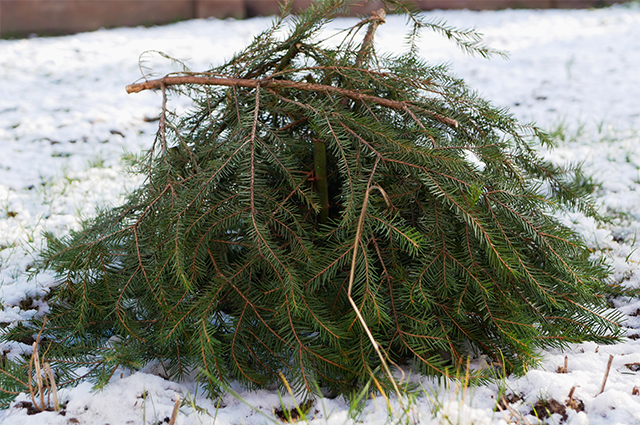
Photo: Shutterstock.com
If the plants have awakened
The most difficult task – save plants, began to emerge from a state of deepest peace. If you notice, like buds on bushes, for example on a rose, began to swell due to the high temperature, then according totry to slow down the process and place the plants in conditions, close to 0°C.
The buds have begun to sprout? Place the seedlings vertically, plant them in a deep pot or bucket with loose soil or peat. This is important, since the sprouts will rush upward in any case, and it will be right, if they grow in a natural direction. Otherwise, the growing shoots after planting will be oriented horizontally. Place the pots in a cool, bright place at a temperature of 8–12°C. Place seedlings with an open root system in water for 5 minutes before planting.–8 hours, this will help dry roots get water.
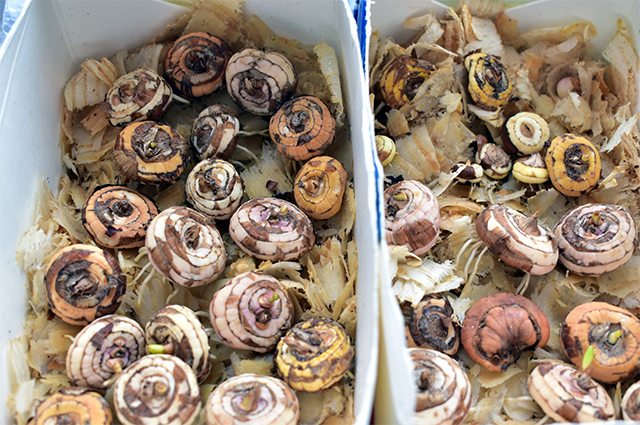
Photo: Shutterstock.com
Gladiolus bulbs, lilies and other flowers have the ability tosuffer due to unstable storage conditions – high temperature and humidity or sudden changes, as well as bright light. Keep the bulbs in complete darkness at the optimal temperature (3–5°C) and humidity (about 70%). It is best to place them in paper bags, and then into the refrigerator. If the first roots appear, cut them off, dry a little and put in a cooler place at 1°C. In case of emergence and roots, and sprouts, plant the onions in containers with soil and put them back in the refrigerator. Look behind the sosby the drowning of plants, do not over-hydrate, which stimulates growth. As soon as the weather permits and the soil warms up, plant the bulbs in the ground. A source: aif.ru
On a note:
Follow the link you will be provided with a convenient search for flights with the ability to purchase air tickets using low-cost airlines, and on regular flights, all over the world.