Since we cultivate a plum cottage, that want to enjoy the fruits. And if something went wrong, then you need to understand the causes of the problems and fix them.
Elena Popleva
/ From personal archive
Plum has «Wish List», without which we will face disappointment.
1. Light and warmth
Plum trees in summer cottages often live in the shade of buildings, v«jungle», among too densely planted fruit crops, or in a low place, where the cold stagnates. And she needs a well-lit area and a distance from another plum or cherry of at least 3 m, to apple or pear tree— from 4 m.
Plum abundance. What varieties can be grown in the Central region
2. Neutral loose soil
Plums and cherries do not do well in an acidic environment. If you care about the tree, but it doesn't grow, take a soil sample to an agrochemical laboratory and take the measures they recommend. They, who already knows, that the soil in the area is slightly acidic, I must lime the area for plums in the fall. It will take 2–2,5 kg of garden lime for each sq. m of light soil and 4–4,5 kg— heavy.
Plum loves loose, fertile soil, moisture-absorbing and breathable. Therefore, before planting, it is recommended to dig up the area with completely rotted manure or compost., using 2 buckets for each square. m. Under fruiting plums you will have to add rotted organic matter (fresh manure is not allowed!) once every 2–3 years under digging. Dose: bucket for 2–2,5 sq. m tree trunk circle. It is better to keep the soil around the trunk loose, so that it can release the carbon dioxide needed by plants.
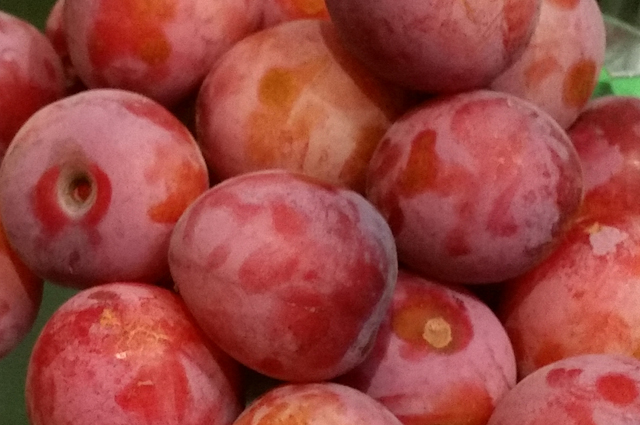
Photo: Elena Popleva
3. Suitable variety
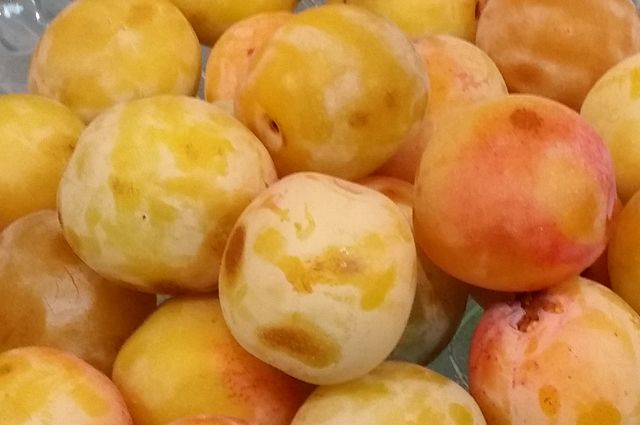
In good conditions, you can plant the largest-fruited and sweet-fruited varieties of common (home) plums: Volga beauty*, Croman, Resin, Yakhontovaya or late varieties of Russian plum— Mara and Cleopatra.
Varieties Alexy, Bolkhovchanka, Vitebsk late, Canting, Breast in, Sukhanovskaya and Violetovaya are somewhat less capricious, and their fruits fall under the category «universal, good taste».
For difficult conditions, plum-sloe hybrids are better suited— so-called damsons. Their fruits are quite small and tart., but the plants are very hardy.
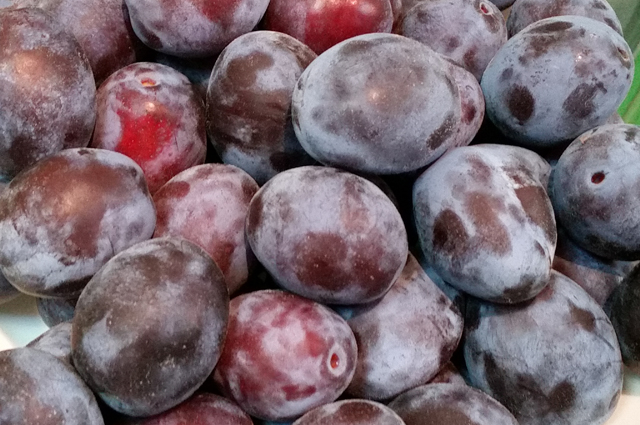
Photo: Elena Popleva
4. Pollination
Sometimes plums do not set fruit due to poor pollination.. In this case, plant a general pollinator in the garden. — variety Skorospelka red.
5. Protection
The plum harvest is often damaged by pests (eg, plum moth) and diseases (the most common— perforated spot). If so, plan for the beginning of next season «course of treatment». Diseases are fought with the help of Abiga-Pik drugs or its analogues, as well as Horus and Fitosporin. Kinmiks is useful against pests (You decide, Fufanon-Nova), Lepidocid or Fitoverm. You will have to carry out several sprayings from the beginning of spring until the ovaries form.
* Recommended varieties for the Central region.